The Heritage
One family. One hundred and thirty years of dressing the overlooked.
From a pawned pair of earrings to the company that invented plus-size apparel — and on to the operating house carrying the work forward.
Back to the present- 1879
A girl is born in Lithuania
Lena Himmelstein is born in Lithuania, then part of Czarist Russia, and orphaned days later. She is raised amid persecution she will never forget.
- 1895
Steerage to America
At sixteen, Lena sails to New York in steerage. Refusing an arranged marriage, she takes work in a Lower-East-Side sweatshop for a dollar a week and learns to sew lingerie.
- 1900
A widow with a sewing machine
She marries jeweler David Bryant; their son Raphael is born. Six months later David dies of tuberculosis. Lena pawns her diamond earrings to make the down payment on a Singer sewing machine.
- 1904
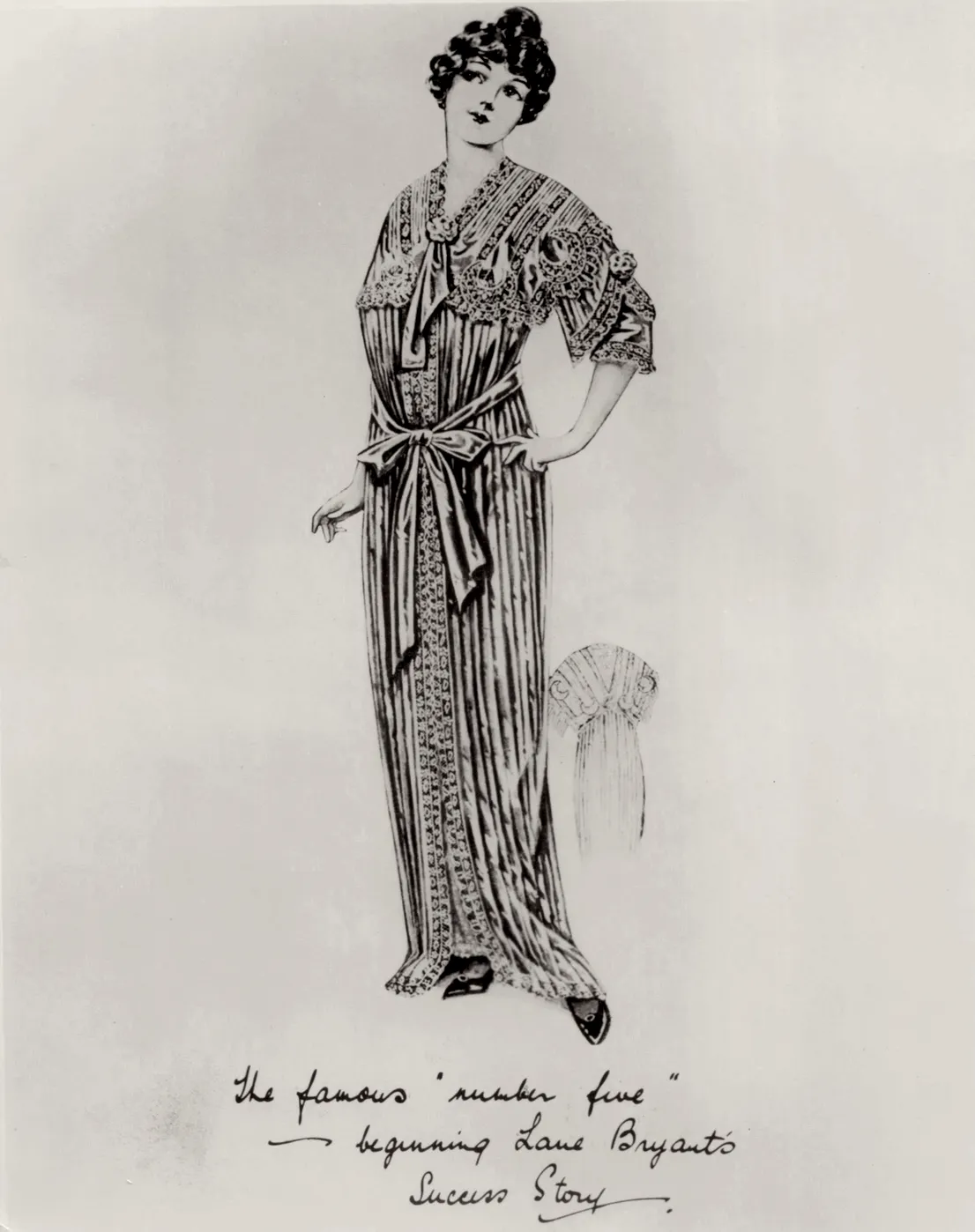
- 1904
“Lane Bryant” is born
Opening a bank account, the timid young widow misspells her own name on the deposit slip — “Lane,” not “Lena.” She grows to like it. The brand is named by accident.
- 1909
The engineer arrives
Lena marries Albert Malsin, a mechanical engineer who brings cost accounting and sizing science to the craft — and the discipline that turns a shop into an institution.
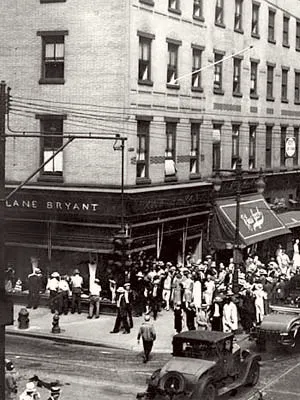
Plate LB.1909 · Lane Bryant's first store. - 1911
The advertisement that sold out
The New York Herald runs the first maternity advertisement ever printed. The entire stock sells out in a single day — $2,800 — and Lane Bryant's fame begins.
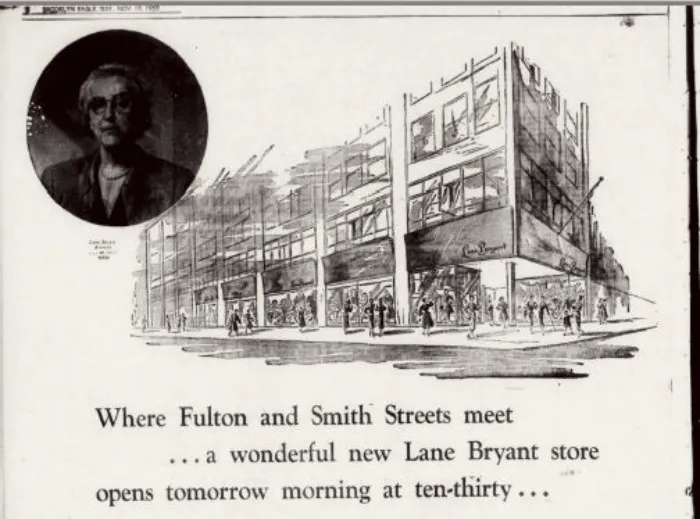
Plate LB.1911 · An early Lane Bryant newspaper advertisement. - 1916
Owned by the people who built it
Incorporated as Lane Bryant, Inc., the company lets its employees subscribe to a quarter of the stock — among the first profit-sharing plans in American retail.
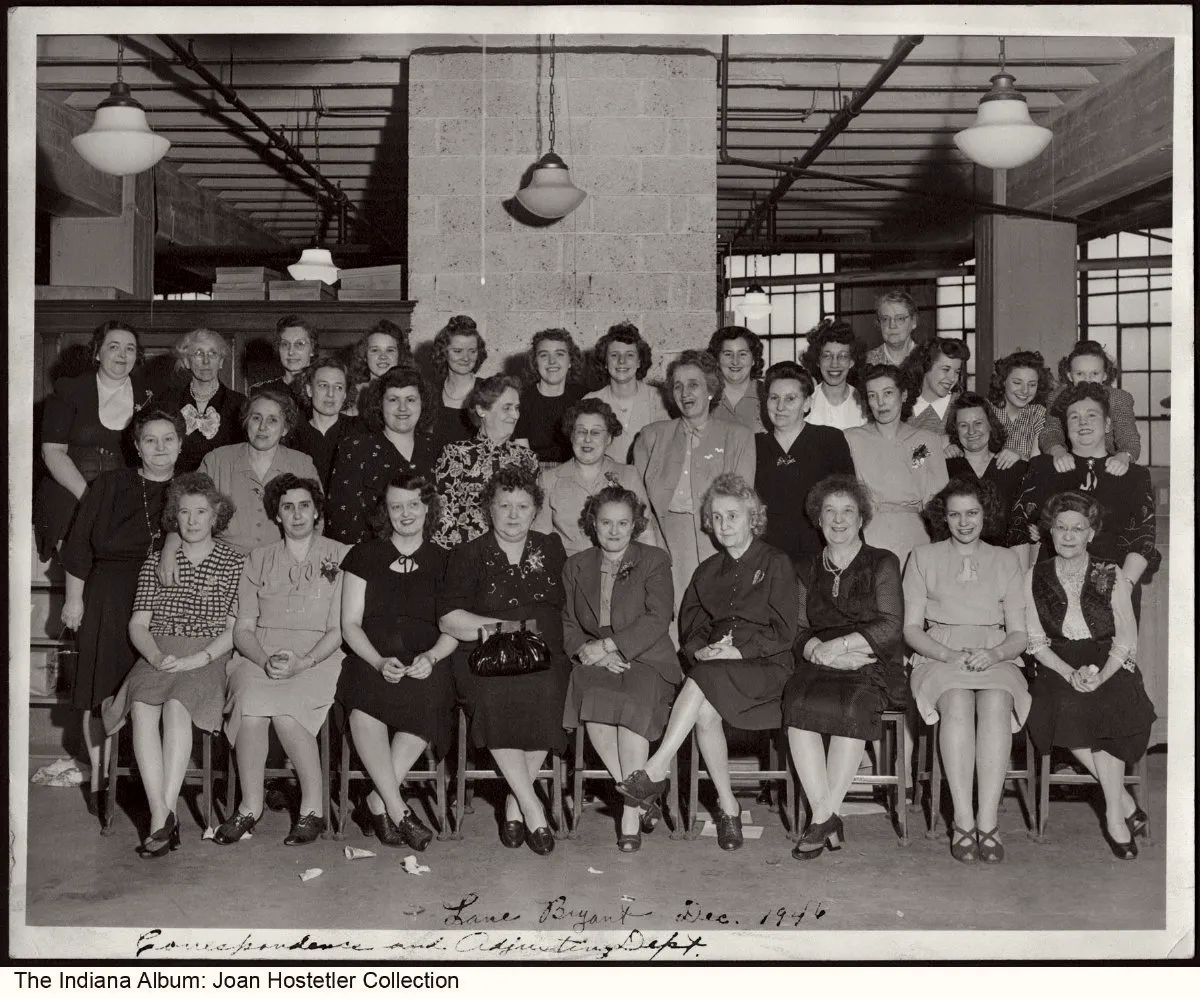
Plate LB.1916 · Lane Bryant employees — among the first to share in company profits. - 1920
The invention of plus-size
With a flexible yardstick, Malsin measures 4,500 customers and 200,000 records, finding that ~40% of women exceeded the “perfect 36.” Lane Bryant designs for them — and invents modern plus-size apparel.
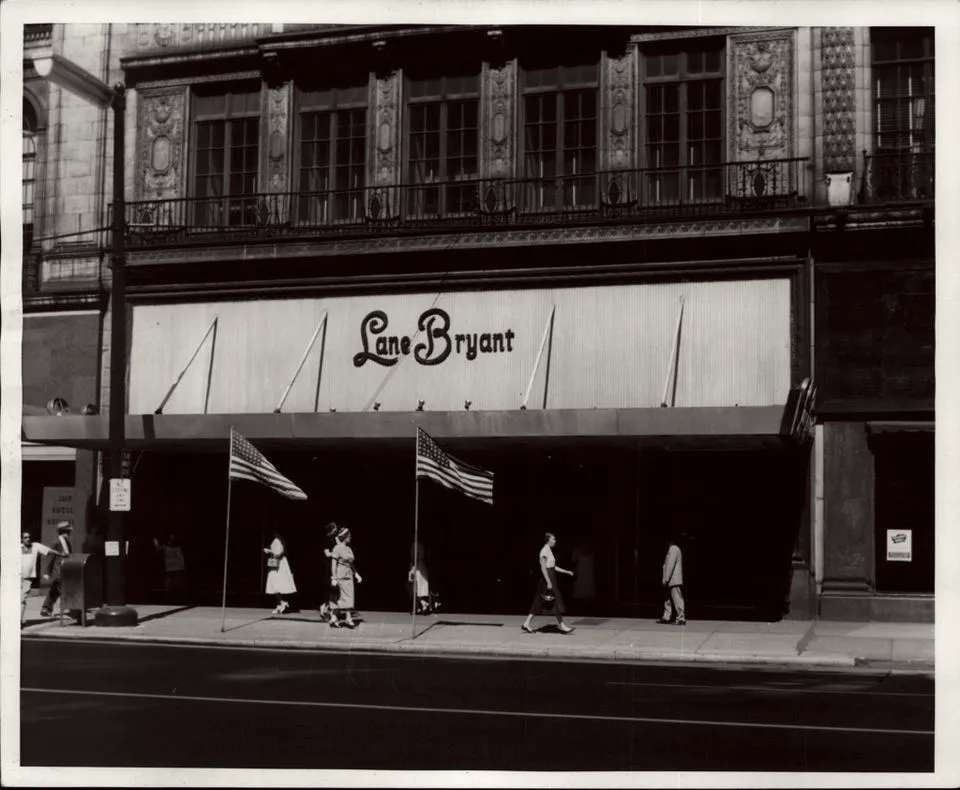
Plate LB.1920 · A Lane Bryant storefront with its script signage and awnings. - 1923
A category comes of age
Albert Malsin dies. By now, larger-size sales have overtaken maternity, and the business has grown to some $5 million a year across a growing chain of stores.
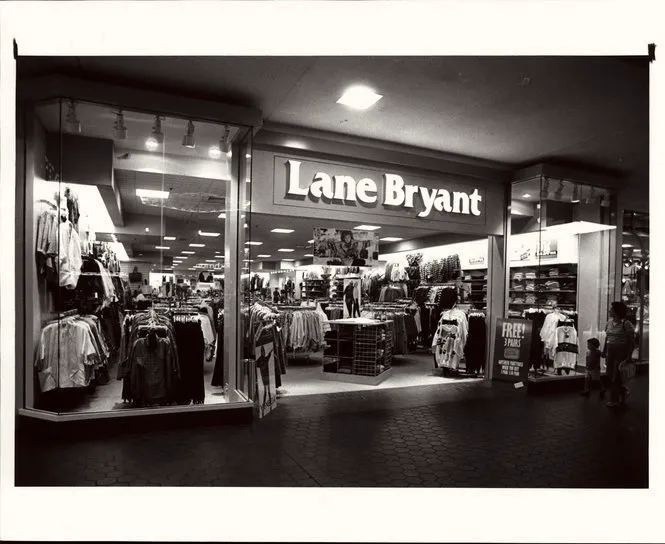
Plate LB.1923 · A Lane Bryant storefront in Cleveland. - 1948
A national institution
As the chain expands across the country, Lane Bryant establishes its annual Volunteer Awards for distinguished public service — later presented at the White House.
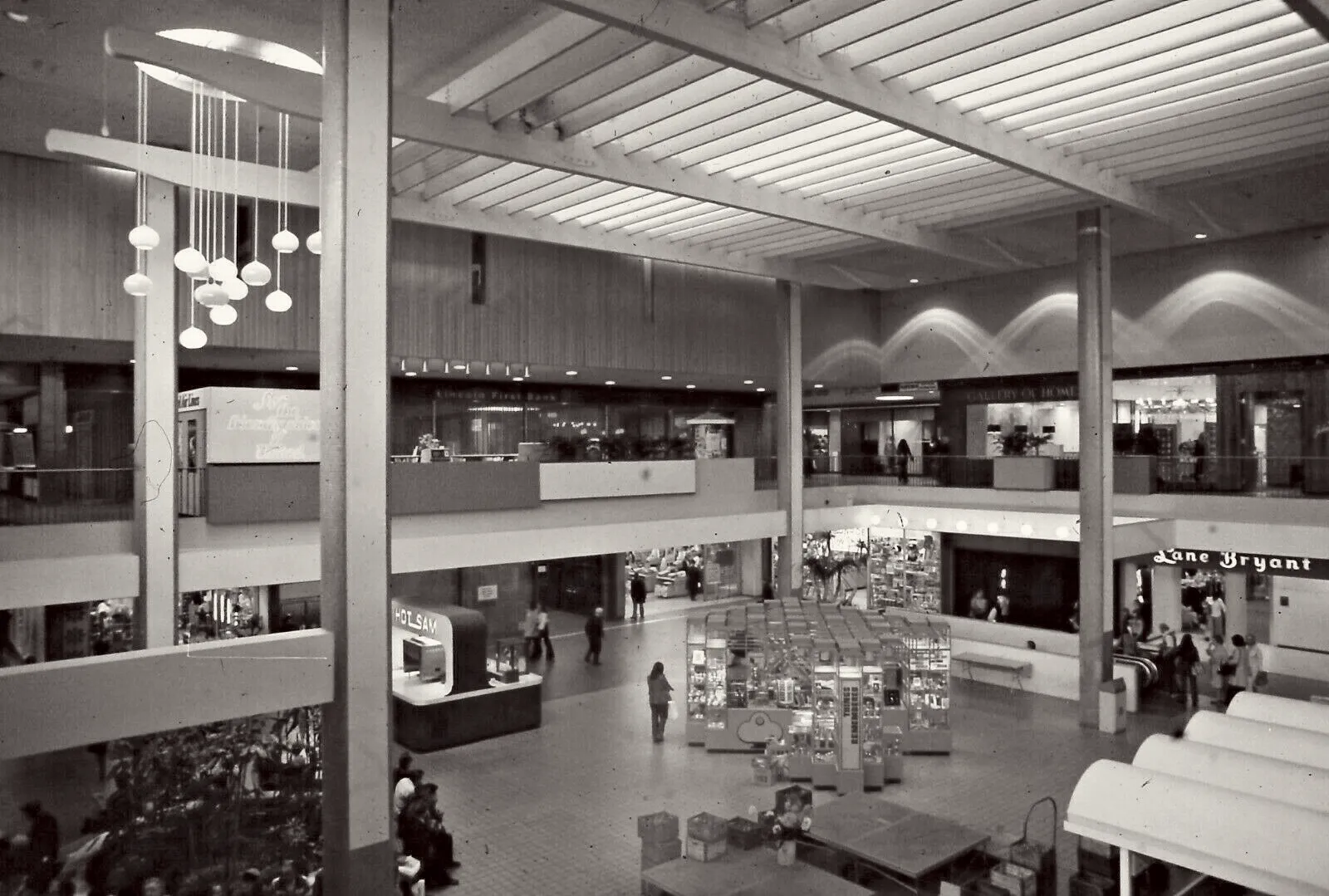
Plate LB.1948 · A Lane Bryant store during the era of national expansion. - 1951
The founder's last day at the office
Lena “Lane Bryant” Malsin dies at seventy-two, still keeping an office in the New York store — a national institution built from a pawned pair of earrings.
- 1957
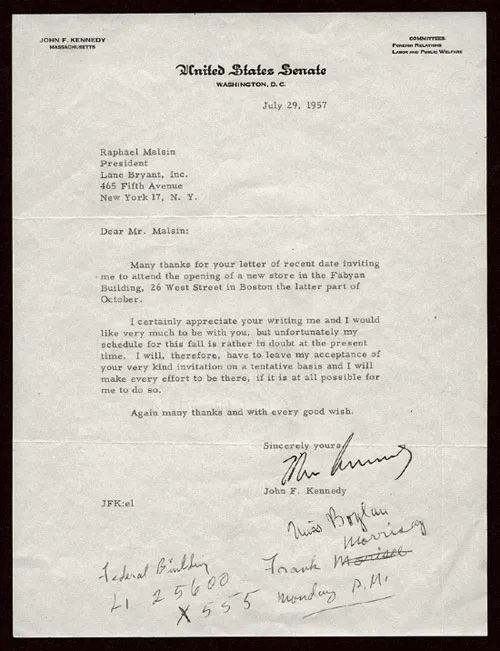
- 1972
A quarter-billion-dollar company
Under Raphael Malsin, the company reaches record sales of $277.5 million — and earns national renown for public service.
- 2004
The next generation
Michael Kaplan, Lena's great-grandson, founds Fashion to Figure — carrying the family's plus-size legacy into a new century of retail.
- 2016
Proven again
Fashion to Figure sells a substantial stake to private equity at 4.5× its prior valuation — and is later acquired by New York & Co.
- 2026
Brykap Holding Group
Michael Kaplan reunites the Lane Bryant founding family with a world-class operating team to acquire, scale, and steward the brands that serve the majority of women — the next chapter of a 130-year story.


The archival images on this page are drawn from the Lane Bryant family record.